

2026
The 23rd San Sebastian Human Rights Festival, organised by the Human Rights area of the City Council and Donostia Kultura, took place between 23 and 30 April, and proved a huge success with the public.
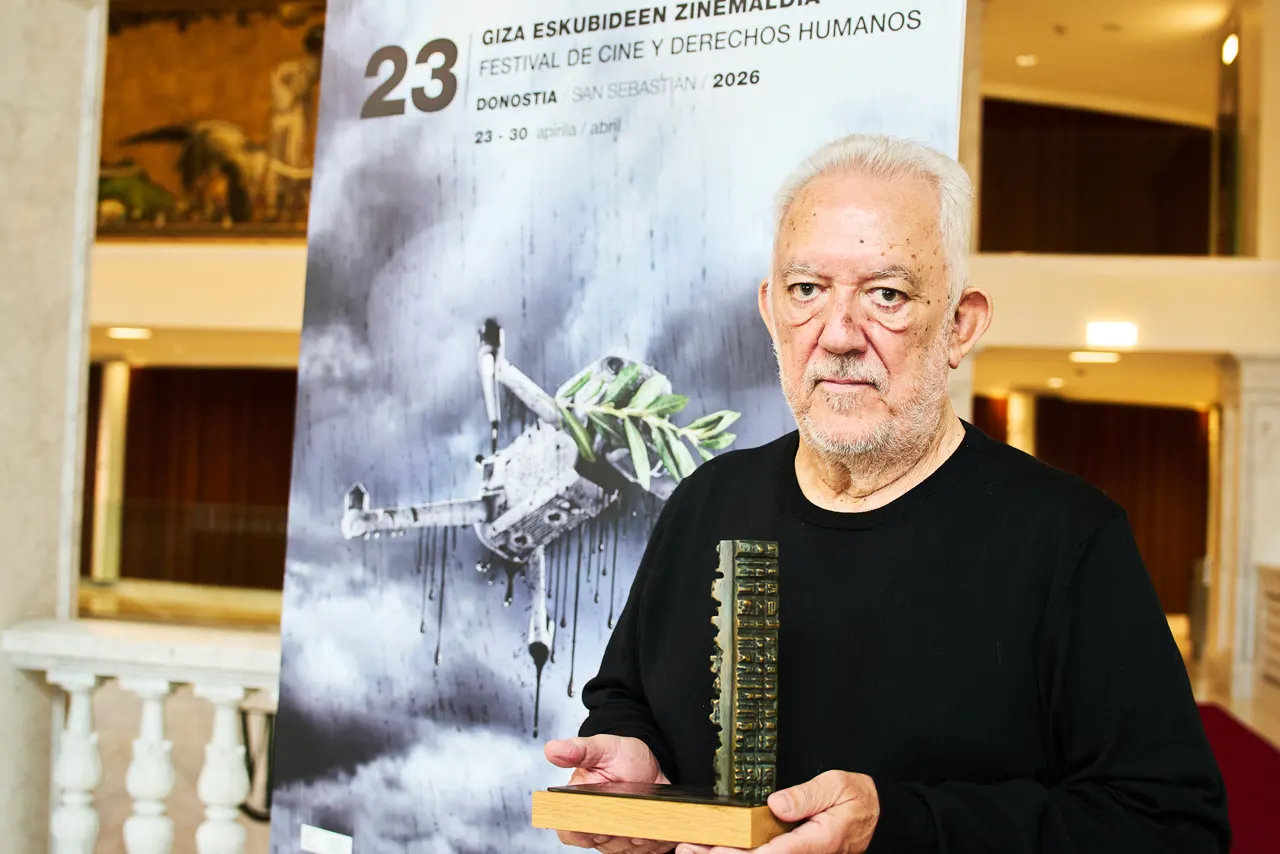
The film Palestine 36 (2025), directed by Palestinian filmmaker Annemarie Jacir, which won the Festival Award in 2019, was given the honour of opening proceedings on 23 April at the Teatro Victoria Eugenia. The US film Rebuilding (2025), directed by Max Walker-Silverman, brought the event to a close on 30 April, likewise at the Victoria Eugenia, at a gala awards ceremony, including a special lifetime achievement award for Imanol Uribe.
The screenings were held mainly at the Teatro Victoria Eugenia, with some sessions at the Teatro Principal, such as the two films included in the 3rd Film and Victimology Series. Tabakalera screened four titles, three of them in the Film and Memory series, and a fourth at a special session organised by Filmoteca Vasca. The film programme was supplemented with daily discussions courtesy of the stars, filmmakers and expert figures in the topics covered. A total of 8 matinees were held at the Teatro Principal for city schools. The films chosen by age group were Animalien eguberri magikoa (2024), Ipuinak lorategi magikotik (2025) and Faisaien Irla (2025).
The Human Rights Film Festival also featured a stand-up performance this year at the Teatro Principal by Asaari Bibang, Humor negra, 4 exhibitions at venues Donostia Kultura, the online human rights game Babes TÚ and the roundtable discussion La era Trump y sus consecuencias.
Visitors
From the visit by British actor Billy Howle at the opening ceremony, as one of the stars of the inaugural film, Palestine 36, down to the special festival award handed to Imanol Uribe at the closing gala, the directors attending the festival to present their films included such names as Tamara Stepanyan, Natxo Leuza, Bàrbara Mestanza, Marc Pujolar, Lander Garro, Mafalda Saloio and Sergio Haro.
The range of debates and round-table discussions also featured a great many figures, including Eva Suárez-Llanos, assistant director of the Spanish Section of Amnesty International; the forensic physician Paco Etxeberria; Gema Varona, director of the Basque Institute of Criminology; the lawyers Aamer Anwar and Cecilia Piris; Javier Canivell, CEO of Zehar-Errefuxiatuekin; Esperanza Santos, emergency coordinator at Doctors Without Borders Spain; and a number of lecturers from the University of the Basque Country.
In just one click


Audience
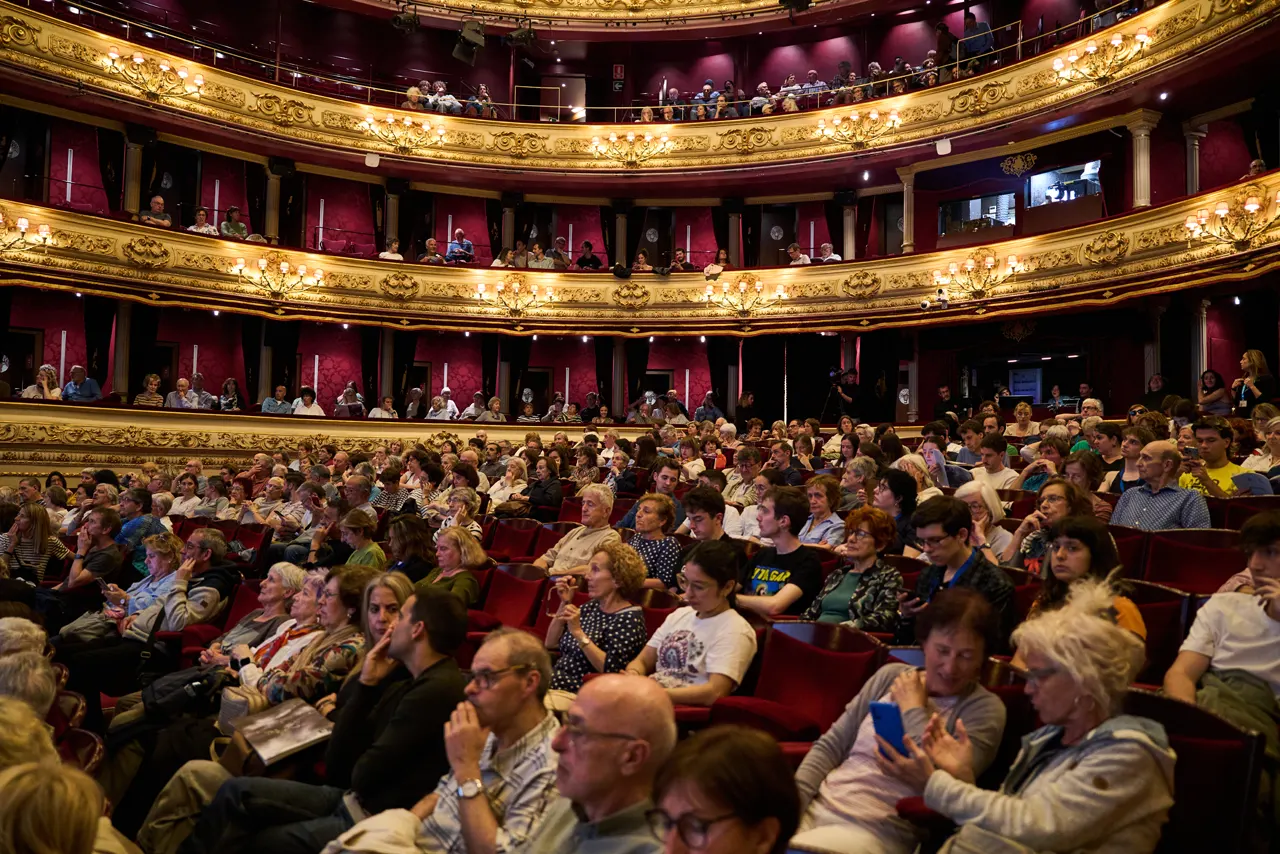
An audience of 7,837 attended the films shown during the Festival: 5,298 at the 23 screenings at the Victoria Eugenia and Principal theatres, 2,292 school students at the 8 matinees at the Principal, and 247 at the 4 screenings scheduled at Tabakalera.
5,788 people visited the 4 exhibitions that were staged: To Tell My Story (Okendo Kultur Etxea), The Three Borders (Aiete Kultur Etxea), 22nd children's and young people's edition of Art and Human Rights (Victoria Eugenia) and Hope by Force (Victoria Eugenia).
A total of 1,208 people took part in the remaining activities (round-table discussions, stand-up comedy performance and the online game Babes TÚ).
Overall, an audience of 14,833 attended the Festival.
Key figures
- 46 films (27 feature-length and 19 shorts) from 35 countries
4 exhibitions
14,833 participants
Topics of this edition
- Bangladesh, at the epicentre of climate injustice
- Child soldiers in West Africa
- Court cases in contexts of political violence
- Denouncing male violence: a right turned into a punishment
- Feminisation of precarious conditions in the European textile industry
- Irreparable consequences of the British mandate in Palestine
- Living as trans in the rural world
- Migration and police border controls with firearms
- Nazi criminals in Latin America: between impunity and neglect
- Patriarchal interpretation of religions
- Sisterhood among refugee women: Tunisia holds a mirror to the world
- The social dimension of child health
- The strength of a neighbourhood against a deportation
- Women in permanent rebellion against the patriarchal system
Participants
- Aitor Bengoetxea
- Aamer Anwar
- Estibaliz Argüelles
- Javier Canivell
- Raquel Celis
- Ivania Cruz
- Sandra Escurza
- Nagore Eskisabel
- Paco Etxeberria
- Izaskun Ferrer
- Joan Font
- Idoia García
- Lander Garro
- Javier Gómez Zapiain
- Sergio Haro
- Billy Howle
- Natxo Leuza
- Pablo Llorca
- Samuel Martín-Sosa
- Amaia Mayor
- Bàrbara Mestanza
- Macrina Miranda
- José Naranjo
- Jokin Pascual
- Cecilia Piris
- Marc Pujolar
- Juan Luis Rod
- Mafalda Saloio
- Jon Santamaria
- Esperanza Santos
- Tamara Stepanyan
- Gema Varona
- Mihiret Elisa Zarate
- Bego Zubia


