

Bangladesh, at the epicentre of climate injustice
Bangladesh is one of the countries most vulnerable to the impact of climate change. Positioned on the delta of the Ganges, Brahmaputra and Meghna, much of its territory is a lowland plain exposed to flooding, rising sea levels and cyclones. One of these, Cyclone Remal in May 2024, required the evacuation of 800,000 people, while also wiping out livelihoods linked to fishing and agriculture on an immeasurable scale, forcing mass population displacements towards the cities. There, in order to provide their families with financial support, many women found themselves driven to work under exploitative employment conditions at one of the country's more than 4,000 textile factories.
These women are today the faces of climate injustice. The expression refers to the fact that industrialised economies generate the bulk of cumulative CO2 emissions, while countries like Bangladesh face the most severe consequences of unbridled consumption and intensive industrial production.
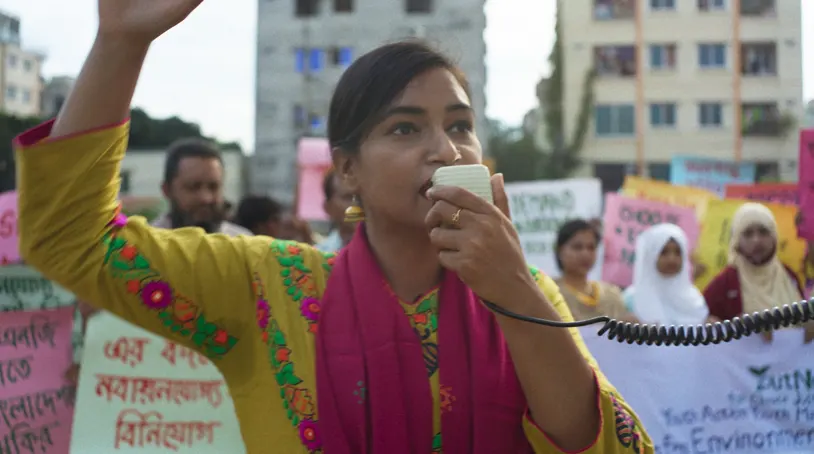
In response to this climate injustice, young Bangladeshis are mobilising in citizen protests. They argue that global warming is the result of predatory Western capitalism, which outsources its environmental costs to more impoverished countries.
The World Bank estimates that by 2050, 13 million people in Bangladesh could be forced into internal displacement for climate reasons. The figure rises to 200 million if we consider the planet as a whole. In its definition of refugee, the 1959 Geneva Convention does not yet acknowledge the concept of "environmental refugee".
Topic
- Bangladesh, at the epicentre of climate injustice
- Child soldiers in West Africa
- Denouncing male violence: a right turned into a punishment
- Feminisation of precarious conditions in the European textile industry
- Irreparable consequences of the British mandate in Palestine
- Legal proceedings against police actions: evidence versus narrative
- Living as trans in the rural world
- Migration and police border controls with firearms
- Nazi criminals in Latin America: between impunity and neglect
- Patriarchal interpretation of religions
- Sisterhood among refugee women: Tunisia holds a mirror to the world
- The social dimension of child health
- The strength of a neighbourhood against a deportation
- Women in permanent rebellion against the patriarchal system


